Experiences
Sometimes, in encounter, we feel the solidarity of the human race, a key component of Social Justice based on the dignity of the human person. ‘Christians moved by the Spirit’ describes Holy Humanism.
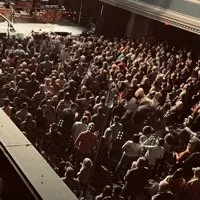
By twenty, I was a concert veteran, a fixture at nearly every Midwest tour stop. It was early on—maybe my third or fourth show—that I started stuffing cotton into my ears for protection, a habit I’m still thankful for today. For the next two decades, my life revolved around massive music festivals with crowds in the tens of thousands. These weren't just concerts; they were massive cultural spectacles blending technology with theater, pyrotechnics, and performance art.
However, as I entered a season of spiritual reawakening, my perspective shifted. Immersing myself in theology, I encountered a quote from a prominent 20th-century theologian who argued that rock music taps into "elemental passions" and that festivals often take on a "cultic character" that rivals traditional worship.
Seeing these events through that lens, I began to notice a sense of idolatry in the crowd's behavior that I hadn't seen before; at its worst, the crowd mimicked worship. My approach to music changed almost immediately. I walked away from the massive multimedia productions and began seeking out intimate venues and singer-songwriters, choosing to prioritize the music itself over the spectacle.
It seems that my confirmation class of fifteen boys had a rather limited imagination.
As the Bishop was anointing us with the sacred Chrism, his weariness was apparent. He discovered almost the entire class had decided to become Matthew or Mark. He proceeded down the line, one by one, trying to stay awake. He repeatedly pronounced each boy’s name, such as “I pronounce you Mark…I pronounce you Matthew…I pronounce you Mark…I pronounce you Matthew,” and so on.
When it was my turn, where God’s providence had placed me at the end of the line, the Bishop’s eyes lit up. He paused, looked at me, and smiled. He announced in a booming voice, “I pronounce you, Cornelius!” I’m not sure why that was amusing, but the Bishop had to pause and wait for the laughter to subside to continue.
Last year, I endured the heartbreaking loss of an incarcerated man I had worked with for over a decade. Our journey began in a court-ordered diversion program, where we studied English to prepare for the GED. Anyone who read or heard my eulogy could sense the deep connection I had with Billy. Tragically, he passed away at the age of thirty-two while fishing on the riverbank. He was a dedicated fork truck driver, and his colleagues adored him. After the funeral, his family revealed that he had accidentally broken his phone at work and had been trying to reach me. Billy had finally achieved his dream of owning a red car, which was his favorite color and his nickname; he wanted me to know. He had a great girlfriend, and maintained regular contact with his mother and his three brothers.
His mother asked me to conduct the funeral, and I did so, sharing many of the memories we had created over a decade together. Among them was his diagnosis with hyperlipidemia. That was just one memory; we had shared family vacations, my seminary experiences, family camping, I taught him to drive and relentlessly quizzed him until he got his license, sat with him through the GED, went to his mother’s on Christmas, Thanksgiving, and birthdays, witnessed his marriage, his first and second babies, visited amusement parks and state parks; I was there for him during his times in jail and during his father’s illness and death.
His wife discovered his initial condition when he had golfball-sized lipid deposits that resembled tumors on his elbows and knees. There were also flaps of lipids all around his eyes. Billy’s wife realized that he would often comply with my requests. Together, we took him to the doctor, who diagnosed him and referred him to a rare blood disease specialist in Indianapolis. This led to numerous visits to doctors in the city before Billy received a license for testing of various kinds.
I frequently found myself called at the seminary to drive Billy to his third shift job at the steel foundry. During these trips, we spent quality time with his wife and eldest daughter, and we even became regular patrons of restaurants, movie theaters, and malls. As my seminary days drew to a close, Billy insisted on accompanying me on two field trips to the big city, one three hours away and the other two hours away, to purchase the necessary tools for my trade. Despite the fact that I often played the role of his protector, Billy saw himself as the one who protected me.
A few months after Billy’s passing, my brother asked me how he was doing. Billy had been working weekends for my brother to earn extra money. I informed my brother about Billy’s passing, which was shocking news to him. My brother vividly remembers me telling him that if he didn’t take the once-a-month blood treatments, which were only available four hours away, his life expectancy would be reduced to a mere eight years. At the time of his diagnosis, Billy didn’t own a car or have a driver’s license. The blood scrubbing treatments were even unavailable in nearby cities. It’s rare for only one in every 250,000 births to be affected by this disease. Both parents must carry a rare recessive gene. My brother and I reminisced about the time when Billy had owned the power-washing business, which was ten years ago. Surprisingly, Billy lived two years longer than the doctors had predicted without the treatments.
At the time of his diagnosis, I promptly sent all the relevant documents to his mother and wife, who subsequently informed the rest of his family. Although Billy was not particularly vocal about his condition, I persistently reminded him about the medication. However, over time, particularly after he had been living on the streets, everyone, including Billy (I believe), gradually forgot about his illness. During the funeral, I brought up the diagnosis, and several individuals mentioned that they had forgotten about it approximately ten years earlier. Despite having informed his entire family and provided them with the doctor’s papers, Billy possessed an extraordinary zest for life. He was young, physically strong, and exceptionally athletic. It was simply easy to overlook his condition.
In any case, his wife emailed me the day after Christmas, inquiring if I knew the names of the doctors we had consulted in the big city because his death certificate was incorrect. I informed her that my records did not extend that far back, but apart from the two nationally renowned specialists in the big city who had treated him twice, I had also taken him to local heart doctors five times. During these visits, they conducted extensive tests, including ultrasounds of his heart and carotid artery, and visited the health clinic for the poor, possibly ten times. It’s important to note that lipids are proteins, and their accumulation closely resembles cholesterol buildup, tenfold. All these visits occurred before he obtained his license. Eventually, he received his license and a car. We always discussed our current lives in the moment, and we never even mentioned his health. After obtaining his license, he underwent a few short stents while in jail and spent some time living on the streets. During this period, he never mentioned his disease to anyone and never sought medical attention again.
Billy lived his life the only way he knew how, as a survivor. Despite knowing his prognosis, he never allowed his illness to define him. His love for life was unwavering, and he was quick to laugh, continuing to live even in the face of the systemic odds stacked against him due to his past of poverty. The death certificate listed his cause of death as ‘chronic drug use.’ However, my family and I know that he was clean when he passed away. He had successfully completed drug court, was in a relationship with a drug-free woman, and had even been named ‘Employee of the Month’ two months before his passing at a drug-testing company. All his co-workers attended his funeral to mourn him, which really moved his mother.
Billy succumbed to natural causes, a heart attack triggered by the buildup of lipids in his veins due to hyperlipidemia, as predicted by the specialists. However, the lipids weren’t confined to his veins; they also accumulated in large, lumpy formations around his eyes, on both knee joints, and both elbow joints. The lipid flaps around his eyes were particularly extensive, numbering in the dozens. Any competent doctor could have observed these physical manifestations of the disease and consulted medical literature. The coroner, considering Billy’s young age and lockup history, made a judgment without even conducting an autopsy or exploring alternative causes. It is disheartening that the voiceless, especially the deceased, lack a voice. While the coroner’s decision was flawed, who will gather the necessary evidence and retain legal counsel to challenge the death certificate?
This situation deeply troubled me, leaving me feeling powerless. Billy’s ex-wife wrote to the coroner requesting a reconsideration, and he promised to review the matter over thirty days. After Billy’s cremation, it will require diligent effort from the coroner to verify the account of his death with his medical records the coroner has a right to see. Perhaps, you think it would be an obligation, but the reality of the matter is that not all public officials take the time to truly investigate and avoid the stigma of judging. Justice is getting what one is due, but I am uncertain whether justice or injustice will ultimately prevail with my friend who has passed from this reality to the next.
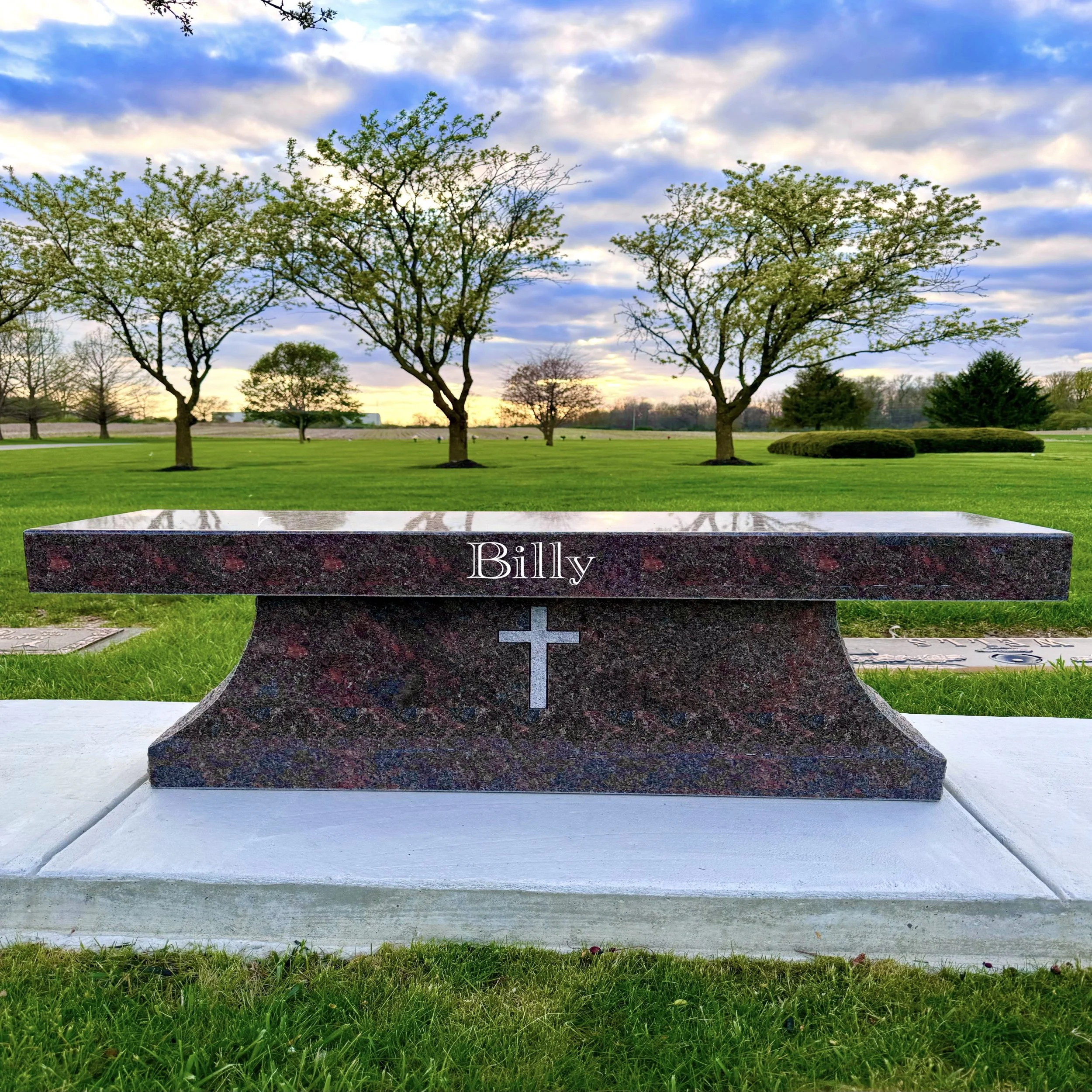
My favorite early high school service assistant and I often make short comments to each other. He is one of these guys and gals that looks at their watch at the beginning of each sermon; I notice this whenever a person sits near the front. One day during communion as we sat on the side bench, I asked him, “Do you know the difference between a good sermon and a great sermon?” He replied, “No.” I said, “The great sermon is less than six minutes.” A few weeks later, after that day’s sermon, during the next portion of the service, I whispered, “How long was it today?” He smiled and replied under his breath, “Five minutes and fifty-nine seconds.” I smiled right back. The following week, it was the turn of a more verbose preacher to preach, and I leaned over before the Scripture reading and asked him, “Are we taking bets between good and great today?” Smiling, he quietly said, “No.” Nonetheless, I saw him glance at his watch (It was a good sermon). The following week as we entered the church and got to the front, Even though I knew the answer to the question and had planned accordingly, I said, “Now how long is that great sermon?” Without missing a beat, he said, “Five minutes.” My mouth gaped open…quick, that fella. Afterwards, I told him if he was going to switch up the rules on me, I’d appreciate a little notice.
All that being said…
My audio blogs are longer than sermons or reflections as they include the Scripture readings used, my musings, and are sometimes the amalgamation of more than one sermon on the same topic.

One of the grade school students approached me after service. Looking up, she asked, “Are you going to the rock show next Friday night?” I replied that I didn’t know there was a show. I asked her, “Are you sure it’s Friday night?” She said, “Let me ask Dad, and off she went.” A bit later, she returned and said, “Yeah, Dad says it’s Friday. Can you go?” I was puzzled. I told her I would have to check my calendar. What puzzled me was that this particular rock show was the same one I had seen a year earlier. I concluded that it seemed likely that this child or her father had seen me at that show. Otherwise, they wouldn’t have any reason to ask me about this specific show.
When I returned home, I visited the ticket website to check if there were any single tickets available in the first row of the balcony, which is my preferred seating area. From there, I can comfortably sit down whenever I want and still enjoy the show. Of course anyone who sits above and below this position can see the front row of the balcony. After looking, surprisingly, there was one seat available, which I interpreted as a positive sign. Subsequently, I opened my daily calendar and noticed that I had a commitment to attend a work meeting that evening. Upon seeing the little girl at school, I informed her of my regrets.
The following weekend, her dad approached me after the service and said, “My child was disappointed that you can’t go to the show.” I told him, “I would much rather go to the show then to my work obligation, but sometimes ya gotta do what ya gotta do.” He smiled and agreed being a job holder himself.
One more week passed and I asked her dad how it went. He was smiling from ear to ear. “It was awesome. We had a great time. Near the end they did some cover tunes including the Beatles. We went nuts.” With a sad smile I admitted, “I love the Beatles.” Sigh. “So do my daughter and I,” he added.

During seminary, one of my classes discussed social justice. Someone behind me remarked, “Why can’t these people pull themselves up by their bootstraps?” My face flushed, and I felt hot around the collar as I firmly and forcefully replied, “They don’t have boots.” Later that evening, a Vietnamese student asked me, “Why do you keep swimming upstream when everyone else is going with the current?” I pondered this for a long time and mentally filed it under “Unanswered Questions.” I mulled this over for years. After recounting the story to a close friend, I was told that I received a “great compliment.” Mentally, I moved it into the “Questions Answered” file.
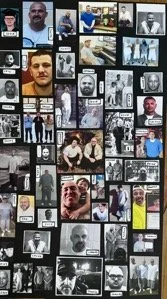
Pen Pal Ministry Participants
Getting internet service should be easy. Right? After a few phone calls, I consigned myself to take whatever I could, at whatever the price. This began a game of a hundred questions, some seemingly unrelated to my basic need for connectivity. Speaking with a thick Hispanic accent, a fella led me into the maze. Somewhere along the line, personal details trickled into our exchange. I am a preacher in the midwest. He is a fallen-away in Southern California. As the call concluded, he asked, “Are there any other questions I can answer for you?” I said, “Yes, there is…” pausing. “Did you know, it’s free to return to church? It won’t cost you a dime.” After a pregnant pause, he chuckled, “Are you sure that’s right? It seems to cost in the long run.” I didn’t hesitate, “Perhaps…It’s either a pay now or pay later situation.” Pausing again, he asked, “What do you think about Catholics who go to other Christian churches?” I said, “You know they don’t have the Blessed Sacrament…right?” He paused, “Yes, I know, maybe I should come back someday.” I said, “Why wait? I hear the sadness of separation in your voice.” Silence. I said, “Out of thousands of service reps, I wonder why I got you?”

I was speaking to the second graders of the ‘why’ of Christmas. The joy of the children was palpable. They were so at ease, just being their charming selves, sharing with everyone their love of life and the feeling of the season. One question I asked sparked an answer I will never forget. I asked, “Why do we gather together to celebrate the birthday of Jesus?” The reply came off-the-cuff and immediate, “Because it is better to give than receive.” Wow! Just Wow! It immediately reminded me of a passage from Matthew: “Jesus turned to God with this prayer: ‘I give you my praise, Father, Lord of heaven and earth! You hid these things from the wise and intelligent and revealed them to children!’ ”

I went to eat at my couple-friend’s house, and I got the grand tour. I noticed the remarkable pine doors, hand-crafted by a local artisan. After I remarked on their beauty, my dear friend said, "We had them made to show as many knots as possible. Isn't that just like us?” My host asked. I acquiesced, “Yes…so unique, so beautiful.”

I was invited to a senior citizen dinner to celebrate two years of ministry. The love in that room was so palpable as people got up to give some memories of my eccentricity and foibles. Every speaker brought something that gave me a newfound appreciation for my zany uniqueness. It was not those memories that nearly broke my heart; it was two of my high school servers who showed up unannounced with smiles and good wishes. The kindness of a teenager is one of the most disarming feelings I know; that’s a gift I’ll never forget.

Back when I used to kneel a lot, I was kneeling at the coffin of Saint Mother Theodore praying. She lies in state in a circular chapel with seating around the outside wall. In a regular occurance during the school year, a middle-school class arrived, pouring into the chapel and sitting on the outside perimeter. The kids were probably told to be solemn and reverent as little was said. As I knelt in the near silence, I heard one child lean over to another and say, “He’s got on Nike.”

I’m captivated by certain aspects of the English language. One particular prepositional phrase in the gospel today caught my attention: “when Jesus saw their faith.” This phrase is a prepositional phrase because it begins with the preposition “when,” followed by the subject “Jesus” and then the object “faith.” A prepositional phrase serves to answer a question, such as where, when, or how. In this case, it answers the question of “when.” When Jesus saw “their” faith, his response was immediate action. The Son of God, embodying perfection and all knowledge, serves as our model for living a life of holiness. By imitating Him, we can find our path towards achieving this divine state.
Let’s consider how people see our faith and how we see the faith of others, and then consider our reaction. Our eyes see others’ acts of service to humanity. On my first full Wednesday, I witnessed the work of (what I counted to be) around thirty Christian volunteers at our weekly lunch for the neighborhood. Many volunteers came from outside the parish. Why would outsiders give their time and talent to the poor and homeless, many of whom struggle within our church boundaries? This is the imitation-of-Christ in action, that’s why.
It started with donuts at 9:30. I saw a tantalizing crème-filled long John. I took a big ol’ bite. It was a few days old; I didn’t know. As a priviledged person, sometimes I forget that God’s blessings are a gift today, tomorrow, and in two days time. I witnessed a young person blessing small groups and individuals in the name of Jesus; I asked for his blessing. Worshiping God, confessing to Him, and adoring Him is our path to sanctification, that is, becoming holy. The homeless wore backpacks, the poor did not.
I saw this fella standing near me, who never once looked me in the eye, who later stole a bike out front. I don’t judge this guy; I don’t know his circumstances. Nonetheless, I witnessed faith when the person losing their bike reacted with grace, not wanting to immediately go to the police—either a step toward forgiveness or at the least, in acceptance of what happens within humanity so often desperate. Forgiving people or asking for forgiveness from peers or from God in confessing is the path to sanctification.
I witnessed one guy who helped another guy by teaching him the rules about how to apply for governmental assistance. Compassion and empathy that move us to action is a move toward holiness, acting as the hands, feet, or mouth of Christ. I saw one person request a Bible from the social justice minister. All social justice flows from the love of Jesus Christ. I saw many people embrace and converse by name, love is the language of the children of God.
I saw a church member collecting personal prayers from the poor and writing them in her prayer journal. Sharing their personal needs with her, her spiritual care for what others are experiencing, and then holding those needs to her heart in prayer, is selfless sacrificial action—a testimony to the Body of Christ. Testimony strengthens our bond with Jesus.
The Holy Spirit called me to share a meal at a table, to break bread if you will, and this is experiencing my humanity: fish sticks, tartar sauce, fruit cocktail, mac and cheese, corn, a roll, a piece of cake. The people found a cleric to be peculiar. I was the newbie here; slowly, some participants cautiously approached and then interacted with curiosity. Later, we were served blizzards, the mistakes of the last week from all over the city. I got Oreo. The ice cream had set up hard, but it made the people happy in the brutal heat of summer.
Listening to the Holy Spirit and exercising compassion are ways others “see” our faith. When Jesus “saw” their faith, his response was action; His response was action in the now. Let’s be like Jesus.

Pretty Stoic, Part One
Where I work, there is a weekly soup kitchen. The hungry and homeless start lining up at eight-thirty for a nine o’clock opening time. They mostly stand or sit on the ground even in the humidity and heat, even in the snow and the rain. They wait. I choose to wait with them. When the doors open, we flood inside, making our way to the cafeteria where donuts and drinks await us. Fellowship time begins, and the bread and fresh food lines start up. The clothes closet opens up down the hall where three people at a time simulate a shopping experience. At 10:30, it’s time to pray and the chow line opens up. I usually wait until people start going back for seconds or to-go containers. Traditionally, staff get their meals and eat at their desks. I prefer to just break bread with the people in need. At first when I attended, I was seen as a curiousity; but as weeks passed, more meaningful interactions between me and the diners followed.
Four weeks back, I had asked my brother to come to lunch. I was talking to Louis, a homeless Christian there, and we were talking about Esau and the fairness or unfairness of the deal that the firstborn twin brother of Jacob got. His friend Jaako was sitting next to him. Jaako was not participating in our conversation, but he would periodically say things to no one in particular, without even looking at Louis or me, about the topic of me and Louis’ chat about the philosophy and theology of the Old Testament. I had invited my brother to come to lunch, and as he sat down, Jaako looked directly at him and began speaking. It struck me that perhaps my collar had made me invisible.
The next week, Louis did not come, but Jaako was there. My brother came as well. They struck up a conversation immediately. I sat there in wonder. Here are two socially awkward guys in dialogue like long-lost friends.
The following week, Louis and Jaako were both there. I told Louis, “We missed you last week.” He gave me a reason why, and then I said, “Jaako had a nice visit with my brother.” Without batting an eye, Jaako said, “Greg is cool.” When I got home after work, I found out that my brother had died from a heart attack. I found myself to be quite stoic, prepared to grieve and suffer in silence.
The weekend thereafter, I gave a sermon about the Wednesday outreach program and what we do there. I was trying to stir up some volunteers and support for the good things that happen there. After Mass, I told a young man (young from my generations point of view) more about what I do; in response to his questions, I told him, “I get there around 8:30 and wait with the others for the doors to open.”
Last week, when I arrived outside the old school, this same young man stood there, waiting for me. He told me, “I want to see what you do.” When we walked up to the overhang, Louis and Jaako sat on the ground. After some small talk, I told Jaako, “Come here.” He got up but stood too far away. I was not prepared to broadcast what I had to tell him. I said, “Come closer,” and he did. I said, with a cracking voice that choked back tears, “Jaako, Greg died.” He said, “Aw,” and immediately embraced me as my tears really began in earnest. All this time I had denied my emotions, but the tenderness of this man struck me to the marrow. Louis said, “It’s gonna be okay,” as if to comfort Jaako and me. Some platitudes grate our consciousness like grit on sandpaper; other times, they melt like butter on a warm biscuit. I believed the four words of Louis.
The volunteering young man who witnessed our humanity reflected on it later in the morning, remarking, “Very touching.”

Pretty Stoic, Part 2
Why do I click on some new songs and some I don’t? How does my mind decide? I clicked, as I was a few stanzas in, it occurred to me that Greg would like this song. Four or five tears involuntarily found themselves rolling towards freedom. I always assumed I was emotionally dead inside; I had observed so much grief from the outside in. I guess there’s still an ember glowing deep among the smoldering smoke of early old age.
Post Script: Song, “This Second Song of Mine” released August 7, 2026.
Comment about artist: Oh, to be eighty and vital!
Post Script 2: My editor suggests I have conditioned myself to keep my emotions under wraps to protect myself, like many professions who care for those who are terminally ill. She states, “Your natural empathy isn't really an emotional response, even though it lets you experience the emotions of others. It's more of a call to action, a skill, a gift.” What a kind thought.
One of my two sisters, on vacation a twelve-hour drive south, called me sobbing. Through her tears, she told me to get to the hospital immediately. She explained that she was the strong one, and our shared sister had just been given horrific news about her husband and needed me.
I went, of course. My sister was, or was close to, hysterical. And that began a walk with my sister in the last twenty-one hours before her husband's death. I, along with five of my brother-in-law’s siblings, two of their spouses, and my sister and brother-in-law’s two children, walked that experience together. Influenza (A) had led to my sister seeking medical care for my brother in law; the infection resulted in pnemonia. As the infection worsened, it moved to his heart. Attempting to prevent blood clots from breaking free from his lungs because he was at a high risk of aneurism after returning from a long jet flight from vacation with my sister, he was given a large dose of blood thinner. The blood thinner would also help maintain his blood pressure. At some point, it is likely an auterial weakness may have ruptured, leading my brother-in-law to suffer a massive brain bleed breaching all four lobes of the brain.
My sister, along with our other sister’s best friend, who was there at our shared sister’s prompting, were together when three doctors told them my brother-in-law had no chance of life, as the brain bleed had settled against his brain stem, which controls many functions, including consciousness and breathing. No one knows what a person hears, or feels, or thinks outside consciousness.
My niece drove three hours on her own and arrived shortly after noon. Her effect on my sister was immediate and comforting. My sister and brother-in-law’s son immediately hopped a plane on a ten-hour flight, upon hearing from his mother that his dad had suffered the bleed that breached all four lobes of his brain. My sister had told the hospital she would honor her husband’s wish to not be attached to a vent, and it would be removed after their son had a chance to be with his Dad in a final goodbye.
We prayed the Divine Mercy Chaplet, bringing us together in the gentle rhythm of bringing our fear of loss into focus. I went to get my nephew by 11:15, and after midnight, my brother-in-law’s siblings and two of their wives began arguing with the State’s authorized corporate representative for organ donation about my sister’s inability to make end-of-life decisions for her husband. My brother-in-law had signed an organ donation card through the state, and when his body could not live without mechanical means to preserve his breathing, his custody was removed from his wife and transferred to the state. My sister was deeply wounded and confused about her inability to make end-of-life decisions for her husband. We were told when the vent was removed, he would stop breathing because of the nature of his condition.
My sister asked that we not bring negative energy into her husband’s room, so my brother-in-law’s siblings and their wives spent time in the lounge waiting so my brother-in-law’s wife and children could be alone with him. None of us slept. Many stories were told as the hours passed. First, we were told the surgeon from the state capital could perform the organ donation surgery at three o’clock. At one point, as I waited with my sister and her family in my brother-in-law’s room, my brother-in-law’s sister-in-law said something that stopped me in my tracks and made me quit arguing about what would happen. She said, “If this saves one life, all of our suffering would make sense.”
At three, we were told the procedure would be at six, and this started a whole new round of arguing as hospital management, their lawyers by phone, and the state defended their right to, in my brother-in-law’s brother’s words, “Hold him hostage.” This time I sat outside the lounge with my brother-in-law’s brother, who had also lost the synergy to continue to argue.
The whole time, my sister had been awake for 48 hours. Around four, a nurse, my sister’s friend, and the wife of one of my brother-in-law’s closest friends, showed up to help us process what was going on. She brought food, coffee, and kindness. She consoled us and commiserated with us, and that tenderness was God’s blessing.
At quarter to five, they took all of us to visit with my brother-in-law for our final goodbye. At five, we accompanied my brother-in-law to an ante room next to the room where the surgery would take place. We sat in a big circle. No one said a word besides my sister, who comforted my niece and nephew as they all held his hand. No one explained what was happening as the medical team sat about the grim task we would witness.
My brother-in-law’s blood, all of it, was removed and replaced with fluids and medications; I learned later this was to flush and preserve the organs, prevent blood clots, and manage his comfort, even though we were told he had no ability to “feel” because of his condition. The state’s corporate representative asked my sister if she would like some music to soothe us. She requested “Let it Be” and “I Can Only Imagine,” both of which, although comforting, started a new round of tears for the witnesses. As my brother-in-law’s heart slowed and before the vent was removed, a final dose of morphine was given. I found out later this was to guarantee absolute comfort, prevent “air hunger,” and ease the workload on his heart. Sometime around six, the vent was removed. Despite what we were told, my brother-in-law continued to try to live, to try to breathe, short, shallow breaths. Seconds, turned to minute after minute. We hung on his every breath. His death was declared by a doctor without a word, except, “six twenty-one,” and a nod to my sister.
The state-authorized representative gently told my sister and her children we must leave for my brother-in-law to immediately have surgery. We moved into the hall in shock. I have struggled greatly with seeing the dignity of human life in the process required to preserve a loved one’s organs to maintain life for those with failing health, or with terminal conditions. In other words, the end is justified, but is the means? I don’t have the answer. The following afternoon I ltold my brother-in-law’s brother, “That was the hardest thing I had ever experienced in my life; not as a minister, but as a human being.”